 NewsMakers-Daily Latest Urdu Breaking News Updates We Make Better News
Saturday, 22 November 2025 | Web Desk
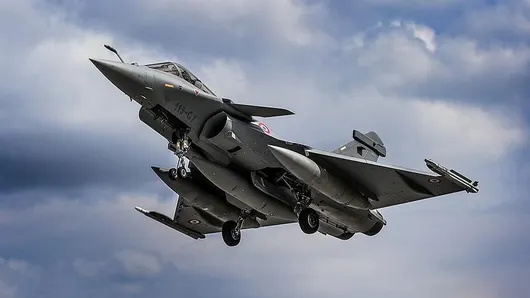
A French commander has confirmed that on the night of May 6 and 7, 2025, Indian Rafale jets were shot down by the Pakistan Air Force. Speaking to the media, Captain Yoc Lonné, commander of a French naval air base, said that the problem was not with the Rafale aircraft but with the Indian pilots flying them.
Captain Lonné has been flying Rafales for the past 25 years and has completed numerous important missions across the Middle East, Africa, and Europe. In the presence of international representatives, he praised the capabilities of the Pakistan Air Force, saying, “The Pakistan Air Force handled the situation extremely effectively.”
Addressing the international session of the Indo-Pacific Conference, he said that the Indian Air Force’s Rafales did not fall in May 2025 because of any technological superiority of Chinese aircraft, but because of Pakistan’s strong defense and effective strategy. More than 140 fighter jets were involved in this bilateral aerial battle. Such a large number of aircraft in the air can become a danger in itself, but Pakistan managed the combat situation with far better strategy.
At this point, the Indian delegate dismissed the account as Chinese propaganda, but Captain Lonné ignored the objection. When Captain Lonné was asked why the Rafale’s radar system failed during the conflict, he responded, “The problem was not in the machine, but in how it was used. The Rafale can defeat Chinese aircraft in any combat scenario, but everything depends on how it is operated.”
The French naval commander revealed that the Indian government is now interested in purchasing the naval version of the Rafale, which can land on aircraft carriers at sea. He explained that these naval Rafales are capable of carrying nuclear missiles, and that only the French Navy currently possesses this capability.
Pakistan Claims to Have Shot Down 6 Indian Jets: Truth or Propaganda?
Armed forces around the world observed the aerial clash between Pakistan and India in May very closely. This extraordinary air battle provided militaries of various countries with a rare opportunity to assess the performance of pilots, fighter aircraft, and missiles.