 NewsMakers-Daily Latest Urdu Breaking News Updates We Make Better News
Web Desk
April 25, 2026
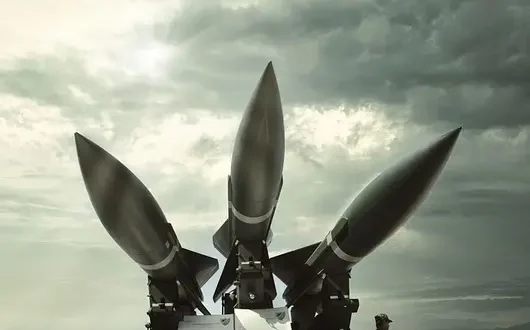
WASHINGTON – The ongoing war between the United States and Iran has begun taking a heavy toll on America’s defense and economic capabilities, with a new investigation revealing that the US has exhausted billions of dollars worth of critical weaponry and is spending nearly $1 billion per day on the conflict.
According to a comprehensive report by The New York Times and analysis by the Center for Strategic and International Studies (CSIS), the US military has consumed a staggering proportion of its most advanced and expensive munitions during the 56-day-old war.
‘Alarming’ Depletion of Key Weapons Stockpiles
The investigation reveals that America’s arsenal of high-end weaponry has been dangerously drained:
| Weapon System | Quantity Used | Key Detail |
|---|---|---|
| Patriot Interceptor Missiles | Over 1,200 | Each costs over $4 million; represents over 60% of inventory |
| JASSM-ER Stealth Cruise Missiles | ~1,100 | Only 1,500 remain; originally built for war with China |
| Tomahawk Cruise Missiles | Over 1,000 | Roughly 10 times the annual production rate |
| THAAD Interceptors | Up to 290 (~80%) | Replenishment expected to take 53 months |
| PrSM & ATACMS Missiles | Over 1,000 | Inventories left “worryingly low” |
Mark F. Cancian, a retired Marine Corps colonel and senior adviser at CSIS, told the NYT: “The US has many munitions with adequate inventories, but some critical ground-attack and missile-defence munitions were short before the war and are even shorter now”.
Strategic Repercussions: America ‘Less Ready’ for China and Russia
The depletion has left the US military “less ready” to confront major adversaries like China and Russia, according to defense officials cited by the NYT. The report noted that the war has forced the Pentagon to divert or delay weapons deliveries to allies including Japan, Ukraine, and NATO members.
A CSIS analyst warned that rebuilding US arsenals to pre-war levels could take one to four years, and recovering full readiness would take even longer. Some officials cited by the Wall Street Journal expressed concern that if China were to invade Taiwan, the US military might not be able to fully execute its contingency plans.
The Cost: Up to $35 Billion and Rising
The financial toll of the war is equally alarming:
- Total estimated cost: $28 billion to $35 billion
- Daily expenditure: Approximately $900 million to $1 billion
- First two days alone: $5.6 billion in munitions
However, experts warn that the true cost could be far higher. Harvard University public finance expert Linda Bilmes argues that Pentagon figures based on “historical value” of existing stockpiles drastically understate the true price. She estimates the actual short-term cost at $2 billion per day, with the long-term total — including veteran care, replenishment, and interest on debt — potentially exceeding $1 trillion.
Asymmetric Warfare: The Economic Trap
One of the most concerning aspects highlighted by analysts is the severe economic asymmetry of the conflict. The US is depleting million-dollar interceptor missiles to shoot down Iranian drones that cost as little as $20,000 to $30,000 each.
This “high-cost defense vs. low-cost offense” dynamic is rapidly draining the American treasury and munitions stockpiles at an unsustainable rate.
Indian CDS General Remarks Spark Debate Over Operation Sindoor
Production Bottlenecks: The Industrial Weakness
The crisis is compounded by deep structural problems in the US defense industry. Analysts warn that replenishing the arsenal is not simply a matter of approving more money:
- Lead times for critical components like solid rocket motors stretch to 24-36 months
- The US produces only around 600 Patriot missiles annually — far below wartime consumption rates
- The Pentagon is reportedly in talks with General Motors and Ford to explore converting auto plants to produce military components — a sign of severe industrial strain reminiscent of World War II
The CSIS concluded that rebuilding key stockpiles would take years, leaving a dangerous gap in US military readiness that America’s adversaries have likely already noted.