 NewsMakers-Daily Latest Urdu Breaking News Updates We Make Better News
Wednesday, 04 March 2026 | Web Desk
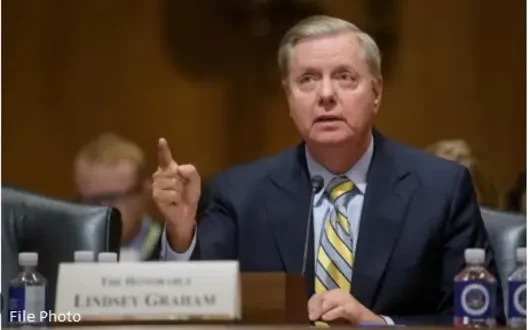
Republican Senator Lindsey Graham, a close ally of President Donald Trump, has made a significant prediction regarding the future of Middle East diplomacy, claiming that Saudi Arabia will join the Abraham Accords and normalize relations with Israel following the elimination of Iran’s current government.
Speaking to media, Graham expressed confidence in the impending shift in Saudi policy once the Islamic Republic of Iran’s regime is no more.
‘No Ifs or Buts’
“I spoke to Saudi Arabia just today. There are no ifs or buts about it,” Graham stated, asserting the certainty of his prediction.
The Senator claimed that with the fall of the Islamic Republic government in Iran, Riyadh would move swiftly to formalize ties with Israel through the Abraham Accords framework.
‘Biggest Prize for Israel’
Graham described potential Saudi normalization as the “biggest prize for Israel” in the region, representing a transformative shift in Middle East geopolitics.
Saudi Arabia, home to Islam’s two holiest places and a leading power in the Arab and Muslim world, has long been seen as the ultimate diplomatic prize for Israel. While the UAE, Bahrain, Morocco, and Sudan have normalized relations with Israel under the Abraham Accords, Saudi Arabia has held back, citing the unresolved Palestinian issue and regional considerations.
Context of Regime Change
Graham’s remarks come as US-Israeli military operations against Iran continue, with the reported martyrdom of Supreme Leader Ayatollah Ali Khamenei and significant degradation of Iranian military infrastructure. Israeli media has claimed that Mojtaba Khamenei has been selected as the new Supreme Leader, though Tehran has not officially confirmed.
The Senator’s prediction suggests that Washington views the current military campaign as an opportunity to fundamentally reshape regional alliances, with Saudi-Israeli normalization being a key strategic objective.
Implications for Region
If realized, Saudi entry into the Abraham Accords would represent a seismic shift in Middle East diplomacy, potentially isolating Iran further and creating a new strategic axis aligned against Tehran. It would also deliver a major foreign policy victory for the Trump administration ahead of upcoming elections.
However, the prediction assumes both the complete elimination of Iran’s current governmental structure and Saudi willingness to move forward despite regional volatility and potential domestic opposition.
No official confirmation from Saudi authorities has been received regarding Graham’s claims.