 NewsMakers-Daily Latest Urdu Breaking News Updates We Make Better News
Web Desk
June 14, 2026
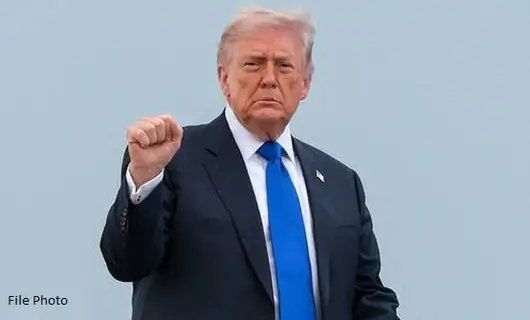
WASHINGTON, D.C. – United States President Donald Trump has announced that a peace agreement with Iran will be signed on Sunday, June 14, 2026, after which the Strait of Hormuz will be immediately reopened to all international shipping.
In a lengthy post on his Truth Social platform, Trump declared that the agreement is scheduled to be signed, describing it as a “WALL TO NO NUCLEAR WEAPON” – a stark contrast to the 2015 Joint Comprehensive Plan of Action (JCPOA) negotiated by the Obama administration.
Key Provisions of the Deal
According to Trump’s announcement, the agreement includes the following key elements:
| Provision | Detail |
|---|---|
| Strait of Hormuz | To be opened immediately after signing |
| Iran’s Nuclear Program | Tehran will not seek, purchase, or develop nuclear weapons |
| Financial Terms | No money will exchange hands (unlike the Obama-era deal) |
| Enriched Uranium | US to retrieve and destroy Iran’s nuclear stockpile |
| Future Relations | US looks forward to long-term cooperation with Iran |
“In fact, they no longer want a Nuclear Weapon, nor will they have one, either through purchase, development, or any other form of procurement,” Trump wrote on Truth Social.
Nuclear Material to be Removed
Trump stated that the United States will address the issue of extracting and disposing of Iran’s enriched uranium at an “appropriate time”.
“At the appropriate time, when all is calm, we will go in and get the Nuclear Dust, buried deep under the powerful sunken granite mountains, thanks to our beautiful B-2 Bombers and their brilliant pilots, and downblend and destroy it, whether in Iran, or the United States,” Trump wrote.
This represents a significant shift from the 2015 nuclear deal, which allowed Iran to maintain a limited enrichment program under strict International Atomic Energy Agency (IAEA) monitoring.
Comparison with Obama-Era Deal
Trump took the opportunity to contrast his agreement with the JCPOA negotiated by former President Barack Obama:
“Unlike Obama’s Hundreds of Billions of Dollars in payments to them, including 1.7 Billion Dollars in green, cold cash, no money will exchange hands”.
He described the 2015 agreement as a path to a nuclear weapon, while calling his own deal a “WALL TO NO NUCLEAR WEAPON”.
Future Cooperation and ‘Ultimate Alternative’
Trump expressed optimism about the future of US-Iran relations:
“We look forward to working with Iran, and the entire Middle East, long into the future. Hopefully, this process will all work out quickly, easily, and smoothly.”
However, he also issued a warning, stating that if the process fails, the United States possesses an “ultimate alternative” that he hopes will “never be used again”.
Iran’s Cautious Response
Despite Trump’s announcement, Iranian officials have been more cautious about confirming the timeline.
Iranian Foreign Ministry spokesman Esmaeil Baghaei stopped short of confirming Sunday as the signing date, telling reporters: “We will have to wait and see about the exact date of the signing of the memorandum of understanding, although it will not be tomorrow”.
Iranian Foreign Minister Abbas Araghchi said on Friday that negotiators were close to reaching an agreement, adding that discussions surrounding Iran’s nuclear program would continue separately.
Pakistan’s Mediation Role
Pakistan has played a central role in mediating the talks between Washington and Tehran. Prime Minister Shehbaz Sharif indicated on Saturday that negotiations were nearing completion:
“With finalisation likely expected in the next 24 hours, Pakistan is preparing for the electronic signing of the peace deal immediately after, followed by technical level talks next week”.
Background: Months of Conflict
The announcement comes after months of devastating conflict between the United States and Iran that began on February 28, 2026. The war has resulted in thousands of casualties, massive military expenditures, and severe disruptions to global oil supplies due to the closure of the Strait of Hormuz, through which approximately one-fifth of the world’s oil normally passes.
The current ceasefire, brokered through Pakistan’s mediation in April, has largely held, though both sides have exchanged limited strikes in recent days.
Global Implications
The reopening of the Strait of Hormuz would have immediate effects on global energy markets, potentially bringing down oil prices that have soared above $100 per barrel during the conflict. It would also restore a vital shipping lane for global trade and ease supply chain pressures that have affected economies worldwide.