 NewsMakers-Daily Latest Urdu Breaking News Updates We Make Better News
Web Desk: In a powerful rebuttal to New Delhi’s allegations, Pakistan’s Deputy Prime Minister and Foreign Minister Ishaq Dar on Thursday publicly challenged India to produce evidence of Islamabad’s alleged role in the recent Pahalgam attack — the deadliest civilian assault in occupied Kashmir since 2000.
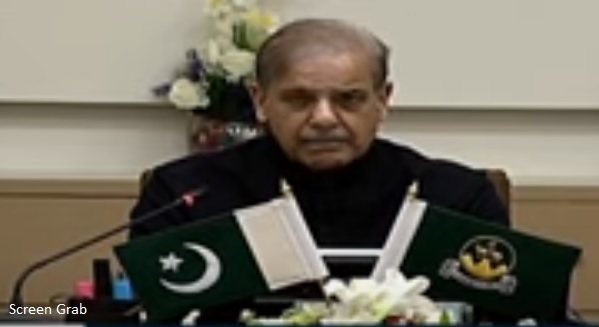
Addressing a press conference after a critical National Security Committee (NSC) meeting, Dar stated, “India keeps repeating this blame game. If there is any proof of Pakistan’s involvement, present it to us and the world.”
The attack, which claimed the lives of at least 26 civilians, mainly Indian nationals and one from Nepal, was reportedly claimed by a lesser-known outfit called The Resistance Front. India responded swiftly by downgrading diplomatic ties, sealing borders, and controversially suspending the Indus Waters Treaty (IWT), a landmark water-sharing agreement between the two nations. However, no concrete evidence of Pakistan’s involvement has been made public.
Standing alongside top ministers, including Defence Minister Khawaja Asif, Dar announced reciprocal actions from Pakistan, vowing that “any misadventure by India will receive a stronger response than before.”
Defence Minister Asif condemned the Pahalgam attack but warned that India was attempting to weaponize the incident politically. “India is exporting terrorism, not just to Pakistan, but globally — Canada and the US have raised concerns. Meanwhile, the world knows we are the greatest victims of terrorism,” he asserted.
Asif also pointed to India’s role in hosting and supporting leaders of proscribed groups like the TTP and BLA, stating, “They are not just safe there, they receive medical treatment — this isn’t speculation, it’s documented.”
Highlighting India’s alleged double standards, he added that if India officially blames Pakistan, “We will give a befitting response. We’re not here to buckle under international pressure.”
On the legal front, Attorney General Mansoor Awan clarified that India cannot unilaterally suspend the Indus Waters Treaty. “Such an act would be illegal. If India proceeds, Pakistan has every right under international law to respond,” he said.
Interestingly, FM Dar noted that India’s diplomatic demarche failed to mention the treaty, raising questions about the seriousness of its threat.
As India hardens its stance, Pakistan’s top leadership is aligning across political and legal fronts. Khyber Pakhtunkhwa Chief Minister Ali Amin Gandapur condemned the Pahalgam tragedy, called India’s response a “deliberate conspiracy,” and vowed a united national stand in case of aggression.
“We are ready to defend every inch of our land. If Indian actions escalate, we will respond with full force,” he warned.
With tensions simmering between the nuclear-armed neighbors, Pakistan’s message is clear: unilateral accusations and treaty violations will not go unanswered.