 NewsMakers-Daily Latest Urdu Breaking News Updates We Make Better News
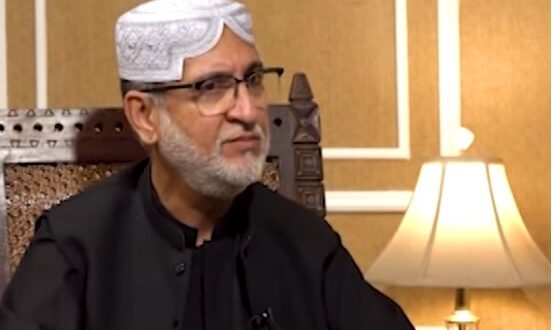
Web Desk: Balochistan National Party (BNP) chief Akhtar Mengal has voiced concerns over the formation of the opposition alliance, asserting that his party has historically been used in political coalitions without any tangible benefits for Balochistan.
Speaking on Aaj News’ program News Insight with Aamir Zia, Mengal made it clear that he would only consider joining the alliance if it genuinely prioritizes Balochistan’s issues rather than serving personal or party interests.
Political Marginalization and Censorship
Reflecting on his time in Parliament, Mengal expressed frustration, questioning whether the current government, which he referred to as a Form-47 government, could understand his stance when even the 2018 assembly failed to do so.
He revealed that his speeches in the National Assembly were often censored and disliked by powerful institutions, and he was warned that he might not be allowed to contest future elections.
During a meeting attended by Prime Minister Shehbaz Sharif, members of the cabinet, the Army Chief, and the DG ISI, Mengal openly addressed these concerns.
“I told them plainly: If you don’t want us to do politics, just say it. We’ll step aside quietly. But given the state of politics today, it would be better to set up a street food stall than engage in this system,” he remarked.
He also criticized the increasing censorship in Parliament, stating that during Imran Khan’s tenure, his speeches were blacked out, but he found alternative ways to share them.
“Now, under the new Speaker, even those recordings have been blocked. One must formally apply just to access their own parliamentary speeches,” he lamented.
BNP’s Strained Relations with Political Alliances
Mengal recalled BNP’s decision to join the Pakistan Tehreek-e-Insaf (PTI) government under a formal agreement, only to leave when PTI failed to honor its commitments.
He expressed disappointment in both the Pakistan Muslim League-Nawaz (PML-N) and the Pakistan Peoples Party (PPP), stating, “We thought they had learned lessons from past mistakes, but their actions have proved otherwise. This PPP is no different from Bhutto’s era, and PML-N remains the same party nurtured under General Ziaul Haq.”
Mengal made it clear that BNP would only support an opposition alliance if it offered concrete assurances that Balochistan’s concerns would be a top priority. Otherwise, he said, “I can only offer my prayers for them.”
Dismissing empty promises, he remarked, “If our politicians had only one face, I might have believed them. But they speak with multiple tongues.”
Demand for Accountability and Justice
Mengal highlighted the assassination of Nawab Akbar Bugti as a turning point for Balochistan and questioned why no official acknowledgment of the injustice had ever been made.
“Has anyone ever officially apologized for his assassination?” he asked.
Condemning the state’s reliance on force instead of dialogue, he said, “When you use a hammer to fix problems, it only creates cracks.”
He urged the federal government to stop treating Balochistan as a colony and take real steps toward rebuilding trust—starting with the return of missing persons.
“If they are no longer alive, at least inform their families,” he demanded, rejecting claims that missing persons had voluntarily joined militant groups or fled to Afghanistan.
“If that were true, why are thousands of women leaving their homes to protest? In our culture, women don’t even step out to vote, let alone march on the streets,” he pointed out.
A Cycle of Frustration and Resistance
Addressing the growing radicalization of Baloch youth, Mengal acknowledged that while many pursued higher education, the political and security climate had pushed them toward frustration and reactionary behavior.
“I’m not justifying their actions, but this is human nature. When faced with constant oppression, people react,” he explained.
Concluding his remarks, Mengal said BNP had tried to serve as a bridge between Balochistan and the federal government, but that bridge had been destroyed.
“I don’t see a way forward anymore. Explaining things to the state is now a waste of time. If they haven’t understood in 74 years, how can a so-called ignorant man like me make them understand now?”