 NewsMakers-Daily Latest Urdu Breaking News Updates We Make Better News
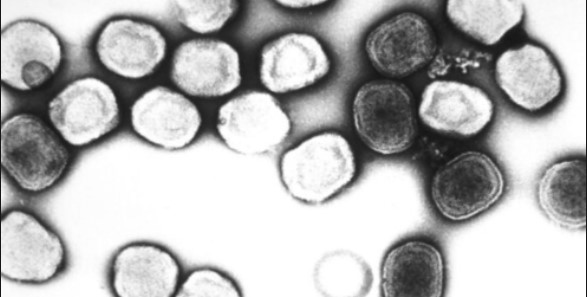
Web Desk — According to World Health Organization (WHO), the risk of monkeypox spreading widely among the general population is very low and transmission can be stopped outside endemic countries in Central and West Africa.
WHO officials said fewer than 200 confirmed and suspected cases had been recorded since early May in Australia, Europe, and North America sparking fears over the spread of the disease.
“Available information suggests that human-to-human transmission is occurring among people in close physical contact with cases who are symptomatic”, the agency added.
Health officials are surprised that monkeypox has been known for 40 years but it was the first time there had been several cases across many countries simultaneously and among people who had not traveled to the endemic regions in Africa.
Monkeypox In Non-Endemic Countries
WHO says that the outbreaks in non-endemic countries could be brought under control and human-to-human transmission of monkeypox stopped. The UN agency said it would provide further guidance and recommendations in the coming days for non-endemic countries on how to mitigate the spread of monkeypox.
Germany has described it as the largest outbreak in Europe ever, as monkeypox cases have been reported in Belgium, France, Germany, Italy, the Netherlands, Portugal, Spain, Sweden, and the United Kingdom – as well as the United States, Canada, and Australia.
Monkeypox Is An Infectious Disease
Monkeypox is an infectious disease that is usually mild and is endemic in parts of the west and central Africa. It is spread by close contact, so it can be relatively easily contained through such measures as self-isolation and hygiene.
“What seems to be happening now is that it has got into the population as a sexual form, as a genital form, and is being spread as are sexually transmitted infections, which has amplified its transmission around the world,” WHO official David Heymann, an infectious disease specialist, told Reuters.
How Monkeypox Virus Transmits?
The virus can be transmitted through contact with skin lesions or droplets of bodily fluid from an infected person. No treatment exists, but the symptoms usually clear up after two to four weeks. The disease is considered endemic in 11 African nations.
Monkeypox Symptoms
Monkeypox, which is not usually fatal, can cause fever, muscle aches, swollen lymph nodes, chills, exhaustion, and a chickenpox-like rash on the hands and face.
Monkeypox Does Not Spread Like COVID-19
Scientists do not expect the outbreak to evolve into a pandemic like COVID-19, given the virus does not spread as easily as SARS-COV-2.
Is It an Epidemic?
Fabian Leendertz, from Germany’s Robert Koch Institute, describes the outbreak as an epidemic. “However, it is very unlikely that this epidemic will last long. The cases can be well isolated via contact tracing and there are also drugs and effective vaccines that can be used if necessary,” he added.
Vaccination
According to the WHO, there is no specific vaccine for monkeypox, but data shows that the vaccines used to eradicate smallpox are up to 85% effective against monkeypox.
British authorities said they have offered a smallpox vaccine to some healthcare workers and others who may have been exposed to monkeypox.
High Alert In Pakistan
Following the emergence of monkeypox cases in the United States and England, the Sindh Health Department has issued a high alert, saying that the virus can spread in Pakistan.
In a statement, the provincial health department said that a high alert has been issued to take timely measures to prevent the spread of infectious diseases in the country.
Infected individuals arriving in the country can cause an outbreak, so the health department has decided to screen the inbound passengers coming from the virus-hit countries, it said.