 NewsMakers-Daily Latest Urdu Breaking News Updates We Make Better News
Wednesday, 25 March 2026 | Web Desk
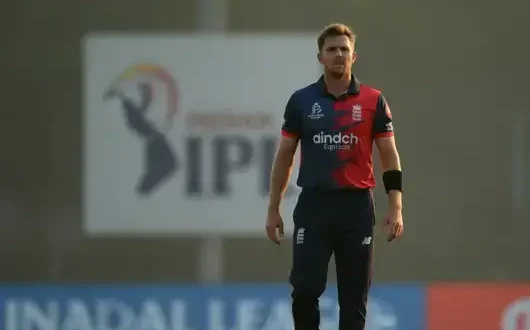
England opener Ben Duckett has left the Indian Premier League (IPL) 2026, just days before its opening. Delhi Capitals purchased Duckett for ₹2 crore in the December 2025 auction, who has now decided to pull out, citing the need to focus on international career.
It is interesting to note that over the past few years, a growing number of high-profile international cricketers, particularly from England and Australia, decided to skip the IPL after being chosen in the auction. In this article, we will provide a comprehensive look at the full list of cricketers who have left the IPL, the reasons behind their departures, and an in-depth analysis of whether the IPL is losing credibility.
Why Did Ben Duckett Withdraw from IPL 2026?
Ben Duckett’s decision to withdraw from IPL 2026 has shocked the cricket circles in India. After consistent fluctuating form and growing pressure on his international spot, Duckett preferred to pick the red-ball cricket for his country England.
Form Crisis
Duckett’s batting form has been declining over the past several months. During the recent Ashes series, he scored only 202 runs in 10 innings at an average of just 20.20. Across his last 16 international innings, he put only a single half-century on score card. With England’s Test season approaching, Duckett feels the need to regain his rhythm in English cricket.
Mental and Physical Fatigue
Explaining the reason for quitting the IPL, Duckett emphasized the importance of mental freshness. He said:
“I’ve thought long and hard about this. It wasn’t an easy decision, but representing England has been my dream since childhood, and I want to give English cricket everything I have. For that, I need to be in the best mental and physical shape before the summer season starts.”
Instead of featuring in the IPL, Duckett will now play county cricket for Nottinghamshire.
IPL Ban Looming
Under the IPL Governing Council’s new rules introduced in 2024, any overseas player who withdraws from the tournament without a valid reason such as injury, will face a two-year ban. This means Duckett will be ineligible for the IPL in 2027 and 2028, effectively ruling him out until the 2029 season.
Cricketers Who Left IPL After Auction (Full List – Past & Present)
Ben Duckett is the latest addition to a growing list of international cricketers slipping from the IPL after being picked up in the auction. Below is a comprehensive list categorized by country, along with the franchises affected and the reasons described.
England Cricketers (Most Affected)
| Player | Season | Franchise | Auction Price | Reason |
|---|---|---|---|---|
| Jason Roy | 2022, 2024 | Gujarat Titans, KKR | ₹2 Cr, ₹2.8 Cr | Personal reasons, bio-bubble fatigue |
| Alex Hales | 2022 | Kolkata Knight Riders | ₹1.5 Cr | Bio-bubble fatigue after BBL |
| Mark Wood | 2024 | Lucknow Super Giants | ₹7.5 Cr | ECB workload management recall |
| Gus Atkinson | 2024 | Kolkata Knight Riders | ₹1 Cr | ECB workload management recall |
| David Willey | 2024 | Lucknow Super Giants | ₹2 Cr | Personal reasons |
| Ben Stokes | 2024 | Chennai Super Kings | ₹16.25 Cr | International duty & workload management |
| Harry Brook | 2025 | Delhi Capitals | Undisclosed | Personal reasons (serving 2-year ban) |
| Jonny Bairstow | 2021 | Sunrisers Hyderabad | — | Avoid quarantine protocols |
| Ben Duckett | 2026 | Delhi Capitals | ₹2 Cr | Form crisis & international focus |
Australian Cricketers
| Player | Season | Franchise | Auction Price | Reason |
|---|---|---|---|---|
| Mitchell Starc | 2026 | Delhi Capitals | ₹11.75 Cr | Cricket Australia workload management |
| Pat Cummins | 2026 | — | — | Injury & workload management |
| Josh Hazlewood | 2026 | — | — | Long-term injury recovery |
| Adam Zampa | 2024 | Rajasthan Royals | ₹1.5 Cr | Personal reasons after busy season |
Other International Cricketers
| Player | Country | Season | Franchise | Auction Price | Reason |
|---|---|---|---|---|---|
| Shakib Al Hasan | Bangladesh | 2023 | Kolkata Knight Riders | ₹50 Lakh | International duty & personal issues |
| Wanindu Hasaranga | Sri Lanka | 2024 | Sunrisers Hyderabad | ₹1.5 Cr | Heel injury (controversial circumstances) |
Key Reasons Behind IPL Withdrawals
The trend of players leaving the IPL after the auction is not unique. Several common factors have emerged across almost all cases.
1. Workload Management (The Biggest Factor)
International cricket boards, particularly Cricket Australia (CA) and the England and Wales Cricket Board (ECB), have become increasingly protective of their players. With a packed international calendar, these boards have called their players from the IPL to save them from injuries and burnout.
Mark Wood, Gus Atkinson, Mitchell Starc, and Pat Cummins are some key examples of players who were either recalled or chose to prioritize national duties over IPL commitments.
2. Mental Fatigue & Bio-Bubble Burnout
Though the bio-bubble restrictions, introduced during the COVID-19 pandemic, have eased, the mental toll of living in restrictive environments for extended periods left a lasting impact. Jason Roy, Alex Hales, and Ben Duckett have all cited mental freshness as a key reason for saying good-bye to IPL.
3. Personal & Family Reasons
Several players have cited personal matters. Jason Roy pulled out of IPL 2022 to be with his newborn child. David Willey and Adam Zampa also gave personal reasons for their withdrawals, highlighting that family now takes precedence over higly-paid IPL contracts.
4. Dip in Form & International Focus
Unlike other players, Ben Duckett’s case is unique. He is not injured nor facing board-imposed restrictions. Instead, he is voluntarily stepping away to work on his game. This reflects a growing mindset among players who value their international careers over lucrative T20 league contracts when their form is under threat.
Is IPL Weakening?
The recurring withdrawals have sparked a significant debate: Is the Indian Premier League losing its credibility? Are international players beginning to prioritize their national commitments over the world’s richest and premier cricket league?
The answer is nuanced. While the IPL remains world’s most powerful and financially dominant T20 league, the withdrawal trend is a genuine concern that the BCCI and franchises cannot ignore.
Yes, It Is a Problem for IPL
1. Franchise Planning Is Disrupted
Sourav Ganguly, former BCCI president and current director of cricket for Delhi Capitals, has spoken openly about this issue, saying:
“It hurts because when quality players don’t turn up at the eleventh hour, the team loses balance. In the IPL, if Mitchell Starc or a player of that caliber is missing, finding a replacement at that stage won’t be easy.”
When a marquee player withdraws, franchises are left desperate for replacements. Often, the replacement is not of the same caliber, and the team’s auction strategy—built around that player—is rendered ineffective.
2. The Two-Year Ban Is Not a Deterrent
In order to discourage the post-auction withdrawals, the BCCI introduced a two-year ban in 2024. Inspite of all this, Harry Brook was banned, and now Ben Duckett has accepted the ban in favor of international cricket. This suggests that for some players, national commitments and personal well-being now outweigh participation in the IPL.
3. Sunil Gavaskar’s Strong Criticism
Legendary Indian cricketer Sunil Gavaskar has been vocal about this issue. He believes franchises need to take a harder stance. He said:
“Some overseas players have started taking Indian hospitality for granted. Franchise owners arrange accommodation for their families, provide every facility, and yet players still withdraw. If owners don’t get tough, this trend will grow.”
Gavaskar has suggested that franchises should consider blacklisting players who repeatedly withdraw after being chosen in the auction.
No, IPL Remains Unshaken
1. A Deep Pool of Replacements
The IPL has a robust system of replacement players. When Jason Roy withdrew, Rahmanullah Gurbaz joined. When Mark Wood departed, Shamar Joseph was signed and made an instant impact. The depth of global talent ensures that no single withdrawal can impact a gigantic platform like IPL.
2. Indian Players Are the Backbone
The IPL’s core strength lies in its home talent. Virat Kohli, Rohit Sharma, Jasprit Bumrah, Hardik Pandya, and the next generation of Indian playrs are the true stars of the league. Overseas players, while valuable, are not the foundation upon which the IPL’s massive viewership and commercial success rest.
3. Unmatched Financial Power and Fan Following
The IPL remains the biggest and the richest cricket league in the world, with a brand value exceeding ₹90,000 crore (approximately $11 billion). Television ratings and digital viewership continue to break records each season. A few withdrawals, while inconvenient, do not affect the league’s overwhelming popularity.
Conclusion
Ben Duckett’s withdrawal from IPL 2026 is neither the first nor will it be the last. It is particularly among English and Australian cricketers, who are increasingly prioritizing international commitments, workload management, and personal well-being over IPL contracts.
It goes without saying that this trend is a warning sign for the BCCI and IPL franchises. The two-year ban seems insufficient as a deterrent, and calls from legends like Sunil Gavaskar and Sourav Ganguly for stricter measures are growing louder.
However, to say that the IPL is weakening would be a wishful thinking. The league’s foundation is built on Indian cricketing talent, an unmatched fan base, and financial muscle that no other T20 league can parallel. While the withdrawal of overseas players is a serious issue, the IPL’s ability to adapt, find replacements, and maintain its status as the world’s premier T20 league remains intact.
The coming years will reveal whether the BCCI and franchises can strike a better balance—ensuring that overseas players remain committed while respecting their international obligations.
Ben Duckett Withdraws from IPL 2026: Full List of Cricketers Who Left & Why – Complete Analysis
Key Takeaways (At a Glance)
| Aspect | Details |
|---|---|
| Ben Duckett’s Auction Price | ₹2 crore (Delhi Capitals) |
| Ban Period | Two years (2027–2028) |
| Most Affected Nation | England (Jason Roy, Alex Hales, Ben Stokes, Harry Brook, Mark Wood, Ben Duckett) |
| Primary Reasons | Workload management, mental fatigue, form dip, international focus |
| Gavaskar’s Stance | Franchises should adopt tougher measures |
| Ganguly’s Stance | Last-minute withdrawals disrupt team balance |
| IPL Brand Value | Over ₹90,000 crore |
| Verdict | IPL is facing challenges but remains the world’s strongest T20 league |
Frequently Asked Questions (FAQs)
Q1: Why did Ben Duckett withdraw from IPL 2026?
A: Ben Duckett withdrew from IPL 2026 to focus on his international career and regain his form. He has been struggling with poor performances in recent international matches and wants to use the county cricket season to rediscover his rhythm. He also cited the need for mental freshness after a demanding schedule.
Q2: Will Ben Duckett be banned from future IPL seasons?
A: Yes. Under IPL’s new rules inducted in 2024, any overseas player who withdraws after being picked in the auction without a valid medical reason faces a two-year ban. Duckett will not be eligible to participate in the IPL in 2027 and 2028.
Q3: Which other cricketers have withdrawn from IPL after being picked in the auction?
A: Several high-profile players have withdrawn in recent years, including:
- Jason Roy (2022, 2024)
- Alex Hales (2022)
- Mark Wood (2024)
- Harry Brook (2025)
- Ben Stokes (2024)
- Mitchell Starc (2026)
- Adam Zampa (2024)
Q4: Why are so many English cricketers withdrawing from IPL?
A: The England and Wales Cricket Board (ECB) has adopted a strict workload management policy to protect its players from injuries and burnout. With a packed international schedule, the ECB often prioritizes national commitments over IPL participation. Additionally, the mental fatigue of bio-bubbles and long seasons has led many English players to step away.
Q5: What do cricket experts say about this issue?
A: Sunil Gavaskar has strongly criticized withdrawing players, suggesting that franchises should adopt tougher measures, including blacklisting repeat offenders. Sourav Ganguly has expressed frustration, noting that last-minute withdrawals disrupt team balance and undermine the auction system.
Q6: What happens to the franchise when a player withdraws?
A: When a player withdraws, the franchise can sign a replacement player from the pool of unsold players or from international cricket.
Q7: Could the BCCI make the rules stricter?
A: Possibly. The current two-year ban was introduced to deter withdrawals, but since players like Harry Brook and Ben Duckett have accepted the ban, the BCCI may consider stricter measures such as longer bans, financial penalties, or even preventing withdrawing players from participating in future auctions.
Q8: Will this trend continue in the future?
A: It is likely that the trend will continue, especially among English and Australian players. As international cricket schedules become more congested and players become more conscious of mental health and workload management, boards and players will continue to make difficult choices between national duties and T20 leagues.
Q9: Did Ben Duckett give any specific reason about mental health?
A: While Duckett did not explicitly cite a mental health condition, he emphasized the importance of being in the “best mental shape” for the upcoming international season.
Q10: Which franchise was affected by Ben Duckett’s withdrawal?
A: Delhi Capitals were the franchise that picked Ben Duckett in the December 2025 auction for ₹2 crore.
Q11: Is there any difference between withdrawing before and after the auction?
A: Yes. If a player makes themselves unavailable before the auction, franchises can plan accordingly. The issue arises when players participate in the auction, get picked, and then withdraw afterward, leaving franchises with no time to re-strategize. This is exactly what happened in Ben Duckett’s case.
Q12: Has any player ever returned from such a ban?
A: The two-year ban rule was introduced in 2024, so there is limited precedent. However, players who accept the ban will be eligible to return after the ban period ends. Whether franchises will be willing to pick them again remains to be seen.
Q13: What is the future of IPL in light of these withdrawals?
A: The IPL is expected to remain the premier T20 league globally. However, the BCCI is likely to engage in discussions with other cricket boards to create a more structured international calendar that reduces scheduling conflicts. The league may also introduce stronger contractual clauses to ensure overseas player commitment.