 NewsMakers-Daily Latest Urdu Breaking News Updates We Make Better News
Web Desk: Pope Francis, the beloved spiritual leader of over a billion Catholics worldwide, has passed away at the age of 88. His death comes shortly after being discharged from the hospital, where he was undergoing treatment for a severe lung infection.
Francis, who became pope over a decade ago, leaves behind a legacy of reform and inclusivity. His passing has sparked renewed discussion over the future leadership of the Catholic Church.
Who Will Be the Next Pope?
The responsibility of electing the next pope lies with the College of Cardinals — a group Francis himself largely shaped. While technically any baptized male Catholic is eligible, popes are traditionally chosen from among the cardinals.
Of the 240+ cardinals currently in service, only those under the age of 80 are eligible to vote. Though the typical voting limit is 120, 138 cardinals are currently eligible due to exceptions made during Francis’s tenure. A randomly selected committee of nine cardinals oversees the voting, and a two-thirds majority is required to elect the next pope.
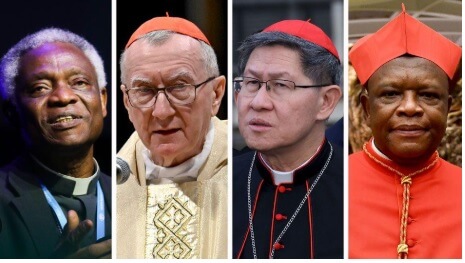
Leading Contenders for the Papacy
- Cardinal Peter Erdo
- Cardinal Luis Tagle
- Cardinal Pietro Parolin
- Cardinal Mario Grech
- Cardinal Peter Turkson
- Cardinal Matteo Zuppi
Historically, papal elections have concluded within days, though some in the past have taken years — the longest being the election of Pope Gregory X.
Of the 138 voting cardinals, 110 were appointed by Pope Francis, reflecting his push for a more diverse and international Church. Voters now include a broader representation from Asia, Africa, and Latin America. The youngest eligible cardinal is a 45-year-old Ukrainian serving in Australia.