 NewsMakers-Daily Latest Urdu Breaking News Updates We Make Better News

Sunday, 28 September 2025 | Web Desk
As part of the restructuring, ByteDance has agreed to establish a new U.S.-based company that will take charge of TikTok’s American operations. This entity will manage a wide range of activities, including e-commerce, branding, and integration with international operations.
Reports from Chinese media outlets LatePost and Caixin initially suggested that ByteDance would continue to play a significant role, even earning revenue from the new company. However, these reports mysteriously disappeared from their websites soon after publication — raising speculation about political pressure and maneuvering behind-the-scenes.
In a stituation where U.S. lawmakers want ByteDance’s influence to reduce significantly, China seems keen to signal that it still retains a stake in one of its most successful global tech products.
A $14 Billion Joint Venture
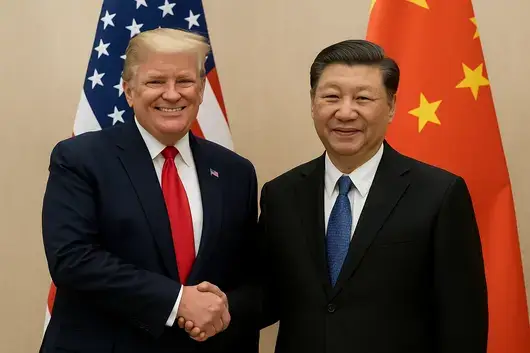
According to U.S. officials, the deal creates a joint venture worth nearly $14 billion. The responsibilities of this venture will be critical: ensuring digital security, protecting America’s national security, safeguarding content, and managing related local businesses.
The joint venture is not just a financial arrangement — it’s also a political statement. By placing U.S. investors at the center, the Biden administration hopes to assure the public that TikTok is no longer a national security risk.
But skeptics argue that questions about data storage, algorithm transparency, and long-term oversight remain unresolved.
Who Owns What?
Ownership of TikTok’s U.S. entity has been a subject of intense debate and negotiation. The deal currently seems as this:
Oracle and Silver Lake, two major U.S. investors, will collectively own around 50% of TikTok U.S.
Existing ByteDance investors — including KKR, General Atlantic, and Susquehanna International Group — will hold about 30%.
ByteDance itself will retain less than 20%, in line with U.S. law passed in 2024, which required the company to divest or face a ban.
This arrangement is meant to give American investors control while allowing ByteDance a symbolic — yet financially lucrative — foothold.
A Board With American Control
Governance of the new U.S. entity will also tilt heavily toward American oversight. The board will have seven members: six Americans and one representative from ByteDance.
The move is designed to reassure U.S. regulators and lawmakers that decision-making power will rest firmly in American hands. Yet, critics warn that influence cannot be measured by board seats alone — especially when it comes to the core TikTok algorithm, which remains a sensitive issue.
Political Reactions: “A Clean Break or a Cosmetic Move?”
Not everyone in Washington is satisfied. Several Republican lawmakers, including Brett Guthrie, Gus Bilirakis, and Richard Hudson, have voiced skepticism.
“As the details are finalized, we must ensure this deal protects American users from the influence and surveillance of CCP-aligned groups,” they said in a joint statement.
Their concerns reflect a broader unease: that the deal might be more cosmetic than substantive, leaving room for Chinese influence behind closed doors.
For many U.S. politicians, TikTok represents more than just a social media app. It’s a test case for how America handles Chinese technology on its soil.
Why China Still Matters
While the U.S. is eager to emphasize American ownership, China is unlikely to let go of TikTok completely. Analysts point out that ByteDance’s continued minority stake, coupled with its ownership of TikTok’s intellectual property and algorithm, ensures that China’s role cannot be erased entirely.
Moreover, the removal of Chinese media reports highlighting ByteDance’s revenue ties suggests that Beijing is carefully managing the narrative. For China, TikTok is not just a company — it’s a symbol of its growing technological influence on the global stage.
The Bigger Picture: Geopolitics and Technology
The TikTok saga highlights a broader struggle between Washington and Beijing over technology, data, and influence. From Huawei to semiconductors, the U.S. has repeatedly sought to limit Chinese access to critical markets.
TikTok, with its 170 million American users, represents a particularly sensitive case. Its ability to shape cultural trends, political discourse, and even election narratives makes it more than just an entertainment app. For U.S. lawmakers, allowing China a foothold in such a powerful platform raises red flags.
At the same time, for Beijing, being forced to restructure one of its flagship tech exports under U.S. pressure is a matter of national pride — and possibly, national humiliation.
What Happens Next?
The deal is not yet finalized, and several hurdles remain. U.S. regulators must review the agreement in detail, and lawmakers could still push for stricter conditions.
Meanwhile, TikTok faces the challenge of convincing both users and advertisers that the platform is stable and secure. In recent years, uncertainty about potential bans has affected business partnerships and user confidence.
If the new U.S. entity succeeds, it could serve as a model for future tech negotiations between the two powers. But if it fails, the episode may deepen mistrust and accelerate the decoupling of American and Chinese technology ecosystems.
A Win-Win, or a No-Win?
Apparently, the TikTok deal looks like a win-win solution. America gains control, China retains some influence, and the app’s millions of users avoid a shutdown.
But experts caution that the reality may be more complicated. The key question remains unanswered: Who controls TikTok’s algorithm? Without full transparency, suspicions will linger.
As one analyst put it: “You can change the board, you can shift the shares, but if you don’t change the code, the power stays where it always was.”
OpenAI Launches “Pulse” – AI Personal Assistant for Users
Conclusion
For American users, it may mean continued access to a beloved app. For investors, it represents billions of dollars in opportunities. For politicians, it is both a victory and a warning.
Yet as the story unfolds, one truth remains: TikTok is no longer just a platform for dance videos and viral memes. It has become a frontline in the digital cold war between two superpowers — and the outcome will shape not just the future of TikTok, but the future of global technology itself.