 NewsMakers-Daily Latest Urdu Breaking News Updates We Make Better News
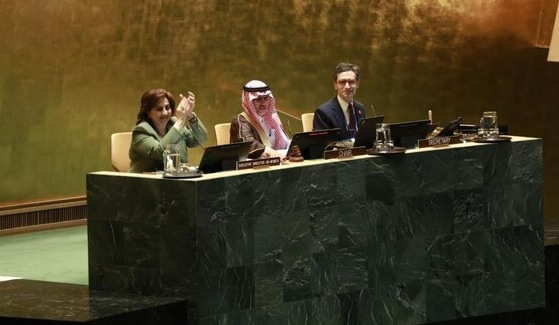
Web Desk: Saudi Arabia’s Permanent Representative to the United Nations, Abdulaziz Alwasil, called on nations to transform decades of gender equality commitments into measurable actions during the opening session of the 69th Commission on the Status of Women (CSW) in New York. Speaking at the pivotal conference, Alwasil emphasized the urgent need to address global challenges threatening progress on women’s rights, including climate change, conflict, and economic instability.
Established in 1946, the CSW is a cornerstone global platform dedicated to advancing gender equality and women’s empowerment. This year’s session marks the 30th anniversary of the landmark 1995 Beijing Declaration and Platform for Action, a transformative framework adopted by 181 countries to promote women’s rights in education, healthcare, and economic participation and to eradicate violence against women and girls.
Reflecting on Progress and Challenges
As chairperson of the 69th CSW session, Alwasil acknowledged significant strides made since the Beijing Declaration, such as increased female leadership, improved access to education, and stronger legal frameworks for gender equality. However, he warned that persistent global crises could reverse these gains. “The promise of Beijing remains as urgent as ever,” he stated, urging nations to prioritize gender equality in all policies and initiatives.
Alwasil stressed that achieving true progress requires “unwavering political will,” inclusive leadership, and sustained investment. “We must create the conditions for women and girls to lead, shape policies, and drive solutions,” he said. He also highlighted the importance of dismantling structural barriers that exclude women from leadership opportunities and equal rights.
Turning Commitments into Action
The Saudi envoy called for accountability in addressing both progress and gaps in gender equality. “Let us use this historic moment not only to reflect on our achievements and challenges but also reignite our collective determination to turn commitments into concrete action,” he added. Alwasil emphasized the need for fully funded and implemented policies that center gender equality across all sectors.
Spotlight on Women Trailblazers
During his address, Alwasil shared the stage with three inspiring women, including Jenna Riffi, a 16-year-old Saudi trailblazer in STEM (science, technology, engineering, and mathematics). Riffi, the youngest member of the NEOM project team, shared her journey as a renewable energy and electrical engineering advocate. She credited Saudi Arabia’s Vision 2030 plan for providing opportunities for young women to break barriers in traditionally male-dominated fields.
“I stand today as proof that determination, resilience, and a supportive environment can empower young women to achieve incredible dreams,” Riffi said. She highlighted the transformative impact of Vision 2030, which has reshaped the narrative around women’s roles in Saudi society through educational programs and leadership initiatives. “Every step you take builds a bridge for the next generations,” she added.
Key Themes of the 69th CSW Session
The two-week session will focus on critical issues such as poverty, work opportunities, climate change, violence against women, and youth engagement. Delegates and advocates from around the world will collaborate to advance gender equality and women’s empowerment, ensuring that the legacy of the Beijing Declaration continues to inspire actionable change.
Conclusion
As the 69th Commission on the Status of Women convenes, Saudi Arabia’s call for concrete action underscores the global commitment to achieving gender parity. By addressing persistent challenges and celebrating trailblazers like Jenna Riffi, the international community can reignite its determination to turn decades of promises into tangible progress for women and girls worldwide.