 NewsMakers-Daily Latest Urdu Breaking News Updates We Make Better News
Date: July 1, 2025 | NewsMakers Web Desk Desk
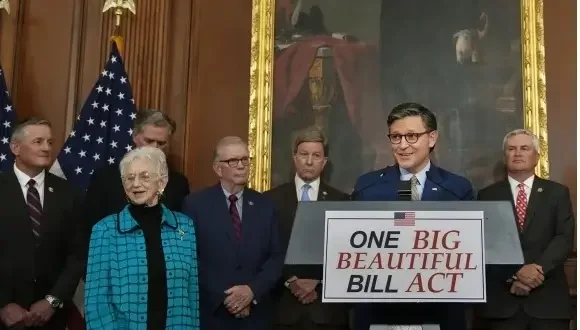
President Donald Trump calls it the “One Big Beautiful Bill Act.” At over 1,000 pages in the House and nearly 900 in the Senate, it’s big and bold — but, for many, it’s bitter.
On the surface, the legislation delivers sweeping tax reforms, promises economic relief, and revives key aspects of Trump’s 2017 tax cuts. But beneath the attractive name lies a reality that could sharpen America’s class divide, reward the wealthy, and leave millions struggling with reduced assistance and fewer safety nets.
A Narrow Win
On July 1, the U.S. Senate narrowly passed its version of the bill, with Vice President JD Vance casting the tie-breaking vote. The legislation now returns to the House, with pressure to finalize it before July 4 — the date Trump wants it signed into law.
Who Gains — and Who Pays the Price?
The Wealthy:
According to the nonpartisan Tax Policy Center, the bill would cut taxes by an average of \$2,800 per household in 2026 — but more than two-thirds of those benefits would go to Americans earning \$217,000 or more. Nearly 25% would go to those making over \$1.1 million.
Families with Children:
The House version boosts the Child Tax Credit to \$2,500 through 2028, then reduces it to \$2,000. However, nearly 4.5 million children could lose eligibility if both parents don’t have Social Security numbers.
The Senate bill proposes a \$2,200 permanent credit indexed to inflation.
MAGA Accounts for Kids:
Children under 8 would receive \$1,000 each for “growth and investment accounts” — part of the bill’s appeal to Trump’s base.
Made-in-America Car Buyers:
Buyers of U.S.-manufactured vehicles could deduct up to \$10,000 in car loan interest annually between 2025–2028, though this phases out at higher income levels.
Workers with Overtime:
- The House bill completely exempts overtime pay from federal income tax.
- The Senate version allows deductions up to \$12,500 for those earning under \$150,000.
Tipped Workers:
The House bill makes all tips tax-free through 2028.
The Senate allows a \$25,000 deduction cap for earners under \$150,000.
Losers: The Working Class, Students, and America’s Most Vulnerable
Low-Income Americans:
Individuals earning below \$17,000 could lose over \$1,000 annually.
Those in the \$17,000–\$51,000 range would lose around \$700 — primarily due to cuts in Medicaid, food assistance, and student loan programs.
SNAP & Medicaid Recipients:
- The House bill slashes \$698 billion from Medicaid, while the Senate version cuts \$1 trillion over 10 years.
- Up to 7.6 million people may lose coverage, according to the CBO.
- SNAP faces \$267 billion in cuts, plus new work requirements for ages 55–64.
Student Loan Borrowers:
Biden-era loan relief policies would be repealed. Graduate loans vanish, and only two repayment plans would remain. Parental and undergraduate borrowing would face strict limits.
Undocumented Immigrants:
The bill raises barriers and costs:
- \$1,000 asylum application fee
- \$500 work permit renewals every 6 months
- Charges for appeals and court filings
- Discourages states from using their own funds to provide Medicaid to undocumented children
The Federal Budget:
Despite massive cuts in social programs, the bill would still increase the federal deficit by \$3.8 trillion between 2026 and 2034, according to the Congressional Budget Office.
Analysis: A “Beautiful” Bill for the Few?
While Trump and GOP lawmakers tout the bill as an economic revival plan, critics argue it marks the further erosion of social equity in America.
It lowers taxes — yes, but for those already financially secure. And it makes low-income survival harder, not easier.
From MAGA savings accounts to untaxed tips and overtime, the bill is styled as populist — but the deepest benefits flow upward, while the heaviest burdens fall downward.
Final Thought
The Big Beautiful Bill is indeed historic. But whether it’s “beautiful” may depend entirely on where you stand in the American economic ladder — and how much further you’re about to climb… or fall.