 NewsMakers-Daily Latest Urdu Breaking News Updates We Make Better News
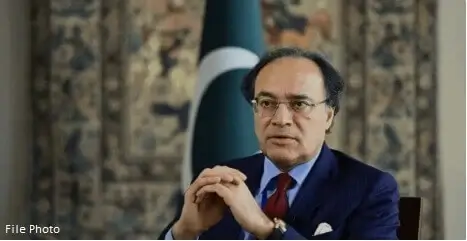
Web Desk – Finance Minister Mohammad Aurangzeb has stated that the recent military escalation with India will not significantly impact Pakistan’s economy and can be managed within the existing fiscal framework, eliminating the need for a fresh economic assessment.
In an interview with Reuters on Monday, Aurangzeb emphasized that the confrontation was a “short-duration escalation” and any financial implications would be absorbed within the current budgetary space.
He added that trade negotiations with the United States—a key mediator in the ceasefire between India and Pakistan—were expected to advance quickly. As a result, Pakistan could soon increase imports of high-quality cotton and soybeans and potentially expand into other sectors, including hydrocarbons.
On the same day, U.S. President Donald Trump confirmed the ceasefire and said Washington was ready to assist both nations, attributing “trade” as a significant factor in halting the conflict.
Pakistan faces a 29% tariff on exports to the U.S. due to a \$3 billion trade surplus. However, this duty has been suspended under a 90-day pause declared in April.
Meanwhile, the International Monetary Fund (IMF) approved a \$1 billion disbursement for Pakistan last Friday as part of a broader \$7 billion bailout program. Aurangzeb confirmed that Islamabad would receive the funds on Tuesday.
Additionally, the IMF executive board approved a new \$1.4 billion loan under its Climate Resilience Facility to support Pakistan’s environmental and infrastructure reforms.
The Finance Minister noted that preparations for the upcoming federal budget, set to commence in July, are underway, with finalization expected in the next three to four weeks. Budget consultations with the IMF are scheduled for May 14 to 23.
When asked about possible increases in military spending, Aurangzeb declined to comment on specifics, saying it was too early for such discussions. However, he assured: “Whatever is required to meet our defence needs will be provided.”
Tensions between India and Pakistan surged following a deadly attack on tourists in Pahalgam, Indian Illegally Occupied Jammu and Kashmir (IIOJK) on April 22, which killed 26 people. The incident triggered the most intense military standoff between the two nuclear-armed neighbors in over two decades.
A U.S.-brokered ceasefire was announced on Saturday after four days of clashes and diplomatic efforts led by Washington.