 NewsMakers-Daily Latest Urdu Breaking News Updates We Make Better News
Date: July 4, 2025 | NewsMakers Web Desk
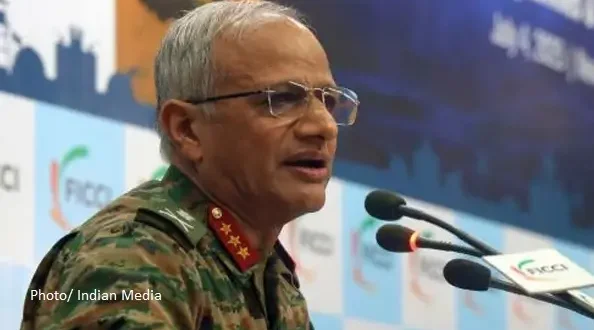
In a rare and candid admission, India’s Deputy Army Chief, Lieutenant General Rahul Singh has publicly acknowledged tactical and technological shortcomings faced by Indian forces during the May 2025 escalation with Pakistan. Speaking at a high-level defence seminar in New Delhi, Lt Gen Singh’s remarks signaled not only the intensity of the recent confrontation but also raised fresh concerns about India’s military preparedness in the face of regional coordination and technological advancements.
Pakistan’s Preparedness “Textbook-Style”: Real-Time Monitoring and Electronic Warfare Superiority
Referring to the crisis—internally dubbed Operation Sindoor—Lt Gen Singh said Pakistan’s military readiness and real-time monitoring capabilities caught Indian forces off guard. He acknowledged that Pakistan’s C4ISR systems (Command, Control, Communications, Computers, Intelligence, Surveillance, and Reconnaissance) were more advanced than previously estimated and played a pivotal role throughout the standoff.
“Pakistan had real-time tracking of our strike assets as we were preparing them,” he admitted. “They were fully ready to respond before we could even act.”
The Deputy Chief emphasized that the Pakistan Air Force displayed unmatched dominance in electronic warfare, allowing them to effectively counter Indian tactical moves.
Fatah Rockets and Air Defence Failures
Adding to the list of challenges, Lt Gen Singh confirmed that Pakistan’s deployment of the Fatah-series guided rocket systems inflicted notable damage on Indian military installations. He further conceded that India’s air defence systems failed to perform optimally, especially during the most critical phases of the confrontation.
China and Türkiye’s Alleged Role Raises Strategic Red Flags
In an unexpected revelation, the Indian general alleged that external players—particularly China and Türkiye—played an enabling role for Pakistan during the escalation.
He claimed that China provided live satellite and intelligence data to Pakistan, which helped them monitor key Indian military positions. During a sensitive DGMO-level communication, Singh recalled, Pakistan allegedly told Indian officials:
“We know your strike assets are ready and on standby,” citing real-time intelligence that Singh attributed to direct Chinese support.
He backed the claim by highlighting that over 81% of Pakistan’s new weaponry acquired in the last five years is of Chinese origin, and accused Beijing of treating the battlefield as a live testing ground for its military systems.
Singh also noted that Türkiye had actively supported Pakistan, with advanced Bayraktar drones and specialized personnel reportedly spotted during the conflict.
Call for Urgent Military Reform
Lt Gen Singh used the platform to urge India’s leadership to immediately upgrade the country’s C4ISR systems and air defence infrastructure, and to enhance civil-military fusion in line with modern hybrid warfare demands.
“We must reassess our doctrines, digitize our command systems, and prepare for integrated regional threats,” he stressed.
He called on the armed forces to learn from the setbacks, stating that India cannot afford to ignore the evolving nature of warfare in South Asia, where alliances and electronic dominance now play a central role.
Pakistan Rejects Foreign Involvement Claims
Meanwhile, Pakistan has categorically denied any direct assistance from China during the conflict. In an interview with Arab News on June 22, 2025, Pakistan’s Defence Minister Khawaja Asif dismissed the Indian claims, saying:
“This was Pakistan’s war and Pakistan’s victory. It was 100% Made in Pakistan.”
He reiterated that Pakistan’s preparedness and success in the conflict was the result of indigenous planning, intelligence, and strategic resolve.
Strategic Implications and Regional Future
Defence analysts believe the Indian general’s admission marks a turning point in regional military dynamics. For New Delhi, it’s a wake-up call to revisit strategic doctrines and modernize rapidly. For Islamabad, it is a moment of validation for years of investment in modern warfare systems and regional partnerships.
As tensions continue to simmer, the May 2025 standoff will likely be studied as a case of 21st-century regional warfare, where information dominance, electronic warfare, and multilateral support proved just as crucial as boots on the ground.
#WATCH | Delhi: At the event 'New Age Military Technologies' organised by FICCI, Deputy Chief of Army Staff (Capability Development & Sustenance), Lt Gen Rahul R Singh says, "Air defence and how it panned out during the entire operation was important… This time, our population… pic.twitter.com/uF2uXo7yJm
— ANI (@ANI) July 4, 2025