 NewsMakers-Daily Latest Urdu Breaking News Updates We Make Better News
Web Desk
May 28, 2026
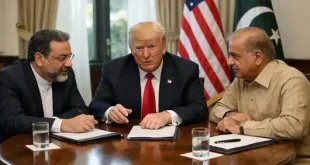
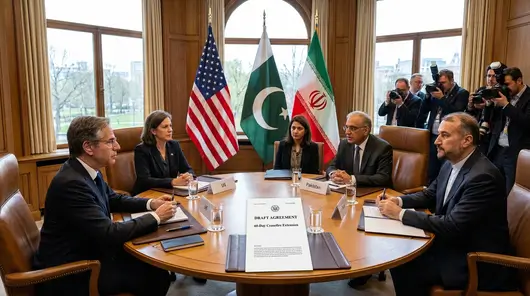
WASHINGTON/TEHRAN – In what could be the most significant diplomatic breakthrough since the outbreak of the US-Iran war on February 28, negotiators from both sides have reached an agreement on a 60-day memorandum of understanding (MOU) to extend the ceasefire and launch negotiations on Iran’s nuclear program.
However, the agreement has not yet been finalized at the highest political levels. President Donald Trump has requested “a couple of days to think about it” after being briefed on the proposal, while Iran’s Supreme Leader Ayatollah Mojtaba Khamenei has also not yet given his final approval.
Key Provisions of the Draft Memorandum
According to US officials who spoke to Axios, the draft MOU includes the following key provisions:
| Provision | Detail |
|---|---|
| Ceasefire Extension | 60-day extension of the current ceasefire |
| Strait of Hormuz | “Unrestricted” shipping; no tolls or harassment; Iran to remove all mines within 30 days |
| US Naval Blockade | To be lifted gradually in proportion to the restoration of commercial shipping |
| Nuclear Commitment | Iran commits not to pursue nuclear weapons |
| Nuclear Negotiations | Disposal of highly enriched uranium and uranium enrichment to be prioritized during 60-day window |
| Sanctions Relief | US to discuss sanctions relief and release of frozen Iranian funds |
| Humanitarian Aid | Mechanism to facilitate delivery of goods and humanitarian aid to Iran |
The Current Status: Agreement Reached But Not Approved
The terms of the agreement were largely finalized on Tuesday, May 26. According to US officials cited by Axios, Iranian negotiators later informed mediators that they had secured the necessary approvals and were ready to sign the agreement. However, Iran has not publicly confirmed this claim.
When US negotiators briefed President Trump on the details, the president did not immediately approve the agreement.
“The president relayed to the mediators that he wants a couple of days to think about it,” a US official told Axios.
Meanwhile, Iran’s semi-official Tasnim News Agency quoted a source close to the talks who said the MoU text has not been finalized or confirmed, and that no communication has been made to Pakistani mediators.
Conflicting Reports from Tehran
While US officials express optimism about the breakthrough, Iranian state media has struck a more cautious tone.
Iranian State TV released details of what it said is in the possible MOU, acknowledging that the agreement has not yet been finalized. According to the Iranian state media report, the proposed MOU includes:
- Withdrawal of US military forces from the “surrounding environment of Iran”
- Lifting of the naval blockade
- Commercial ship traffic to be restored to pre-conflict levels within one month
- Management and routing of ship traffic to be carried out jointly by Iran and Oman
- If a final agreement is reached, a binding UN Security Council resolution would confirm the deal
Military Hostilities Continue Despite Talks
Despite the diplomatic progress, military clashes between the two sides continued even as negotiators were finalizing the agreement.
In the early hours of May 28, Iran launched a ballistic missile toward Kuwait, and the US military struck Iranian drones and launch sites near the Strait of Hormuz. US Central Command (CENTCOM) issued a statement condemning Iran’s actions as a “clear violation of the ceasefire”.
The White House has also rejected elements of an Iranian state media report on the MOU, calling it a “complete fabrication”. Treasury Secretary Scott Bessent declined to confirm that an agreement had been reached, cautioning:
“It’s always a mistake to get out ahead of the president, and it is all going to be the president’s decision”.
Key Disagreements Remain
Even if the MOU is approved, significant disagreements persist between the two sides on several issues.
| Issue | US Position | Iranian Position |
|---|---|---|
| Frozen Funds | Release tied to disposal of enriched uranium | MOU includes return of $12 billion in frozen funds |
| Control of Hormuz | US added Iran’s new shipping agency to sanctions list | Iran seeks joint control with Oman |
| Enrichment | Complete halt demanded | Right to peaceful enrichment non-negotiable |
| War Reparations | None | Compensation for damages |
Regional and Global Implications
The potential agreement has already had an impact on global energy markets. US gasoline prices dropped by 3.3 cents on the day of the announcement—the largest single-day decline since 2008. However, crude oil futures rebounded following reports of renewed military clashes.
The Strait of Hormuz, through which approximately one-fifth of the world’s oil normally passes, has been effectively closed since the war began. Its reopening would be a significant relief for global energy supplies and economies worldwide.
What Comes Next?
The coming days will be critical in determining whether this diplomatic breakthrough translates into a signed agreement or collapses under the weight of continued hostilities.
If President Trump gives his final approval and Supreme Leader Khamenei follows suit, the 60-day ceasefire extension would take effect, allowing negotiators to tackle the far more complicated and technical issues at play—particularly regarding Iran’s nuclear program and its remaining stockpile of highly enriched uranium.
If not, as Trump and other officials have repeatedly warned, “option B” —a return to combat operations—remains on the table.