 NewsMakers-Daily Latest Urdu Breaking News Updates We Make Better News
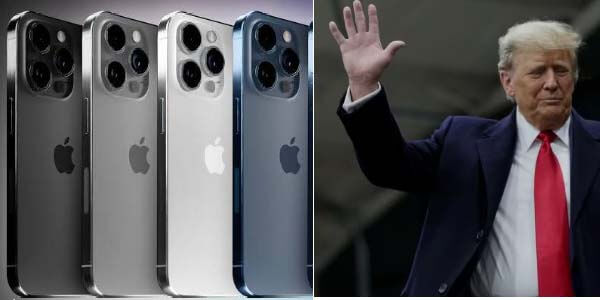
Web Desk: If you plan to buy a new iPhone or any other smartphone soon, there’s some good news: prices may not skyrocket after all, thanks to a recent shift in U.S. trade policy.
President Donald Trump has announced new tariff exemptions for key technology imports from China, including smartphones, computers, processing chips, and other essential electronics. These exemptions could help keep iPhone and other smartphone prices more affordable for American consumers.
iPhone Prices Could Have Reached $2,300 Without Tariff Relief
Earlier projections warned that the price of an iPhone could soar as high as $2,300 due to Trump’s previously planned 54% tariffs on Chinese goods. That number was feared to climb even higher after the Trump administration raised import tariffs to 145% on products from China, the U.S.’s third-largest trading partner.
However, these latest tariff exemptions, announced Friday, are a massive relief for the tech industry.
“This is a dream scenario for tech, because now, chips, smartphones, computers all get exempt,” said Daniel Ives, a well-known tech analyst at Wedbush Securities, in an interview with USA TODAY.
Ives emphasized that major tech companies like Apple, Microsoft, and Nvidia can now “breathe a sigh of relief.”
“Trump ultimately had to listen to Silicon Valley and what industry executives were telling him in the White House,” Ives added. “If they went down this path and didn’t exempt tech, it would have been just dark days ahead.”
Tech Imports Still Face 20% Fentanyl-Related Tariffs
While smartphones and chips are now exempt from the 125% tariffs, they remain subject to an earlier 20% tariff Trump imposed on Chinese imports in response to China’s involvement in fentanyl production. Still, the partial exemption is a win for the industry and consumers alike.
What It Means for Consumers and iPhone Buyers
“This is a game changer,” Ives said. “Consumers can breathe a sigh of relief… You don’t have to rush out to the store. We’re not seeing $2,000 iPhones anymore.”
Apple, which produces the vast majority of its 200 million iPhones annually in China, has already launched the iPhone 16e, priced at $699 for the 256GB model, while the premium iPhone 16 Pro starts at $999.
The Future of Chip Manufacturing and AI Competition
In response to growing supply chain concerns, tech companies have diversified their chip sourcing to countries like Taiwan and Mexico. The U.S. government, under both Trump and Biden, has pushed to boost semiconductor manufacturing on American soil.
Taiwan Semiconductor Manufacturing Co. (TSMC) — the world’s largest chip maker and a key supplier to Apple and Amazon — recently announced plans to build chip factories in the U.S. However, production will take years to ramp up.
Without the tariff exemptions, tech companies would face increased costs for chips, hindering progress in the ongoing AI revolution.
“The U.S. tech industry would be taken back a decade, and the AI revolution thesis would have been slowed significantly,” Ives wrote in a note to investors on April 12.
Tech Stocks Poised to Rally
With the burden of tariffs eased, tech stocks are expected to rally, according to Ives.
“It’s like a weight lifted off tech and the market’s shoulders,” he said.
This development is not just good news for consumers looking to buy affordable smartphones like the iPhone — it’s also a positive signal for the stock market and the broader tech sector.