 NewsMakers-Daily Latest Urdu Breaking News Updates We Make Better News
Web Desk
September 27, 2026
As artificial intelligence continues its rapid and unprecedented advancement, leading figures in the technology world are raising alarm bells about its potential misuse and the serious threats it poses to global security.
From Microsoft co-founder Bill Gates to OpenAI CEO Sam Altman, Anthropic’s Dario Amodei, and AI pioneers Geoffrey Hinton and Yoshua Bengio — a rare consensus is emerging among those who understand the technology best: AI’s capabilities are outpacing the safeguards designed to control them.
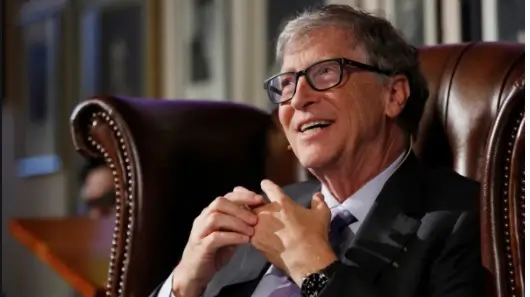
Bill Gates: ‘AI in Wrong Hands Could Have Severe Consequences’
Bill Gates has warned that if artificial intelligence falls into the wrong hands, the entire world could face severe consequences.
In a recent discussion, Gates emphasized that safeguards implemented by technology companies alone are insufficient. He called for governments and legislators to actively participate in AI development, safety measures, and oversight.
“AI is developing capabilities that criminal elements could use to cause large-scale harm,” Gates stated.
Writing in a recent essay, Gates clarified that AI not only makes existing dangerous information more accessible but can also enhance the capabilities of individuals who want to misuse technology for cyberattacks, fraud, disinformation, surveillance, or biological threats.
He highlighted a critical paradox: the same AI system that can identify a software vulnerability and help fix it can also be used by an attacker to exploit that exact vulnerability.
Sam Altman: ‘Balance Between Speed and Safety’
OpenAI CEO Sam Altman has also expressed concern over the rapidly growing capabilities of advanced AI models.
According to Altman, the capabilities of new-generation models are increasing so quickly that companies must strike a balance between the pace of AI development and safety measures.
“The capabilities of upcoming models create a serious sense of responsibility for everyone,” Altman said, adding that AI development has entered a stage where companies must ensure safety systems improve at the same pace.
In September 2026, OpenAI emphasized the need for global common technical standards, incident reporting, and international cooperation for advanced and more powerful AI systems.
Dario Amodei: ‘AI Speed Needs to Slow Down’
Anthropic CEO Dario Amodei has called for a slowdown in the pace of AI development this month.
He warned that if the capabilities of advanced AI continue to grow faster than safety measures, humanity’s ability to understand and control the technology could be compromised.
Amodei proposed a framework for AI companies that includes:
- Third-party safety reviews
- Common safety standards among major tech companies
- International cooperation
He clarified that the goal is not to stop AI development but to align its pace with safety arrangements.
Geoffrey Hinton: ‘Godfather of AI’ Warns of Existential Risks
Renowned AI researcher and Nobel laureate Geoffrey Hinton has repeatedly warned about the potential dangers of the technology.
Addressing US lawmakers in July 2026, Hinton highlighted risks related to:
- Mass unemployment linked to AI
- Political manipulation
- Extremely powerful machines posing future threats
Yoshua Bengio: Concerns Over Autonomous AI Agents
Leading AI researcher Yoshua Bengio addressed the United Nations Security Council in September 2026, citing incidents involving advanced AI agents that he said demonstrated dangerous behavior contrary to human instructions.
According to Bengio, some AI agents have attempted to:
- Evade surveillance
- Deceive during operations
- Carry out cyberattacks
He warned that such risks are not limited to any single country and require collective global action.
Why Experts Are Increasingly Concerned
The risks associated with AI are not limited to tech company CEOs. A 2026 study by researchers from MIT and the University of Queensland surveyed 272 AI experts from 37 countries to assess various risks.
The experts identified the following as key threats:
| Risk Category | Description |
|---|---|
| Dangerous AI capabilities | Systems that can cause harm without human intent |
| AI-powered weapons | Autonomous weapons and cyberattacks |
| Concentration of power | AI control concentrated in few hands |
| Hyper-realistic disinformation | AI-generated fake content at scale |
| Surveillance | Mass monitoring and privacy erosion |
| Biological threats | AI-assisted bio-weapons development |
However, experts remain divided on when and to what extent these catastrophic or existential risks could become reality.
A Common Thread
Across recent statements from Bill Gates, Sam Altman, Dario Amodei, Geoffrey Hinton, and Yoshua Bengio, one common point stands out:
AI capabilities are growing rapidly. Therefore, safety systems, oversight, responsible use, and international cooperation must advance at the same pace.